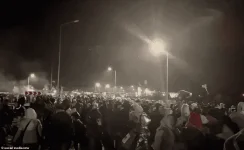
Huddled masses of frightened Ukrainians fleeing the Russian invasion last night rode trains from Lviv in the country’s west to NATO ally Poland, with men under 60 allegedly prevented from leaving by officials and forced to say goodbye to their families.
Astonishing videos show a vast exodus at the city’s railway station as terrified civilians race to neighbouring countries to escape Vladimir Putin’s forces.
Witnesses at the station claimed that men aged 18-60 were blocked by state officials from getting on trains after Ukraine’s president Volodymyr Zelensky declared a general mobilisation and ordered men under pension aged to stay behind and fight the Russians.
At least 150,000 people have escaped Ukrainians into neighbouring countries, the UN refugee agency said on Saturday. It is feared that 4million people could flee the war-torn country if the situation deteriorates further.
One woman is believed to have been killed during a crush at the border with Poland as people queued for 25 hours, with temperatures plummeting below zero at night, to escape bombs in the besieged country.
A British man caught up in the chaos with his Ukrainian girlfriend called the scene ‘absolute pandemonium’, adding: ‘There was very little organisation and the closer you got to the front, the more people were pushing and shoving.
‘Every so often there would be these big surges and people would be screaming. There were lots of young children and it felt very dangerous. Terrifying. Fights broke out as people accused others of pushing in or of hurting them. People had blood running down their faces. We saw a couple of women fainting and being carried above the crowd.
‘And there was a strong rumour that someone had been crushed to death – the Polish border guards confirmed they had heard it was true.
‘It was beyond unsafe. I have got bruises on me from all the pushing and I am just pleased that we finally managed to make it to Poland.’
Some Ukrainians have walked many miles through the night while others have fled by train, car or bus, forming lines miles long at border crossings. They were greeted by waiting relatives and friends or headed on their own to reception centres organised by neighbouring governments.
 PH
PH