 PH
PHCapitol Theater (Manila)
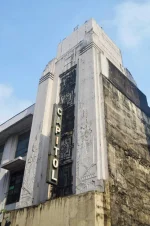
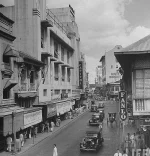
Pre-war Manila was a city of entertainment, its streets lined with nightclubs, cabarets, theaters, cinemas, and social clubs. The city had so much theaters that some were built right in front or beside each other. So, along the stretch of the beautiful Escolta is a first-class theater that many members of the alta sociedad prefer, which is the Capitol Theater.
The Capitol Theater sits on prime land at the western side of the Escolta, once the country's premier business and shopping area north of the Pasig River. The Capitol Theater is one of the city's many cinema theaters, but not the Escolta's only cinema as its rival (later sister) theater Lyric is only two buildings away from the Capitol.
The Capitol Theater was built in 1935, and a masterpiece of National Artist Juan F. Nakpil de Jesús, who also designed the Pérez Samanillo Building together with the great Andrés Luna de San Pedro. It was designed and built in the art-deco style of architecture, an architectural style that was prevalent in the 1920s and 1930s. The Capitol had a total of eight hundred seats, and one of Manila's air-conditioned theaters. One interesting feature of the Capitol was its design. Inside the theater, Nakpil made use of double balconies, which was then a rare architectural design. Its lobby adorned murals designed by the triumvirate composed of Filipino modernists Victorio C. Edades, Carlos V. Francisco, and Galo B. Ocampo. According to documents, Nakpil originally commissioned Edades to work on the mural. Edades then chose 'Botong' Francisco to be his assistant, who then brought with him Ocampo. The three had just returned from the United States and hoped to change the Philippine art scene long dominated by the masters Fernando Amorsolo and Guillermo Tolentino.
There are other interesting things about the Capitol Theater. Its façade has two bas-relief sculptures designed by Italian sculptor and expatriate Francesco Riccardo Monti. Monti's other works also include the bas-relief sculpture called 'Furies' at the old Meralco (then Manila Electric Railroad and Light Company, now the Manila Electric Company) Building along Calle San Marcelino, sculptures atop University of Santo Tomás' main building, and the sculptures at the Quezón Memorial in Quezón City.
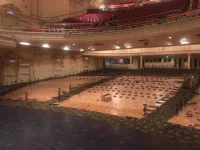
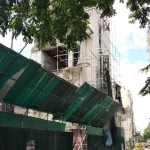
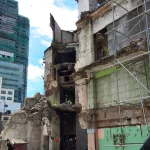
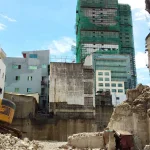
What used to be one of Manila’s top architectural and entertainment landmarks is now nothing but a pile of debris after being fully demolished to make way for a new building.
After news of its demolition surfaced in 2017, the pre-war art deco building Capitol Theater located in Escolta has now officially been torn to the ground—even if it was earlier said that parts of its façade will be preserved.
Previously approved by the National Commission for Culture and the Arts, National Historical Historical Commission of the Philippines and National Museum as required by the Philippine Heritage Act of 2009, the order for Capitol Theater’s demolition included an instruction to the property’s developer to preserve the building’s façade, including the bas-relief sculpture of two Filipinas which was made by renowned Italian expatriate sculptor Francesco Monti.
Pre-war Manila was a city of entertainment, its streets lined with nightclubs, cabarets, theaters, cinemas, and social clubs. The city had so much theaters that some were built right in front or beside each other. So, along the stretch of the beautiful Escolta is a first-class theater that many members of the alta sociedad prefer, which is the Capitol Theater.
The Capitol Theater sits on prime land at the western side of the Escolta, once the country's premier business and shopping area north of the Pasig River. The Capitol Theater is one of the city's many cinema theaters, but not the Escolta's only cinema as its rival (later sister) theater Lyric is only two buildings away from the Capitol.
The Capitol Theater was built in 1935, and a masterpiece of National Artist Juan F. Nakpil de Jesús, who also designed the Pérez Samanillo Building together with the great Andrés Luna de San Pedro. It was designed and built in the art-deco style of architecture, an architectural style that was prevalent in the 1920s and 1930s. The Capitol had a total of eight hundred seats, and one of Manila's air-conditioned theaters. One interesting feature of the Capitol was its design. Inside the theater, Nakpil made use of double balconies, which was then a rare architectural design. Its lobby adorned murals designed by the triumvirate composed of Filipino modernists Victorio C. Edades, Carlos V. Francisco, and Galo B. Ocampo. According to documents, Nakpil originally commissioned Edades to work on the mural. Edades then chose 'Botong' Francisco to be his assistant, who then brought with him Ocampo. The three had just returned from the United States and hoped to change the Philippine art scene long dominated by the masters Fernando Amorsolo and Guillermo Tolentino.
There are other interesting things about the Capitol Theater. Its façade has two bas-relief sculptures designed by Italian sculptor and expatriate Francesco Riccardo Monti. Monti's other works also include the bas-relief sculpture called 'Furies' at the old Meralco (then Manila Electric Railroad and Light Company, now the Manila Electric Company) Building along Calle San Marcelino, sculptures atop University of Santo Tomás' main building, and the sculptures at the Quezón Memorial in Quezón City.
What used to be one of Manila’s top architectural and entertainment landmarks is now nothing but a pile of debris after being fully demolished to make way for a new building.
After news of its demolition surfaced in 2017, the pre-war art deco building Capitol Theater located in Escolta has now officially been torn to the ground—even if it was earlier said that parts of its façade will be preserved.
Previously approved by the National Commission for Culture and the Arts, National Historical Historical Commission of the Philippines and National Museum as required by the Philippine Heritage Act of 2009, the order for Capitol Theater’s demolition included an instruction to the property’s developer to preserve the building’s façade, including the bas-relief sculpture of two Filipinas which was made by renowned Italian expatriate sculptor Francesco Monti.
