PH
PHGrabe na talaga mga nangyayari. Nawa'y patuloy parin ang pagiging matatag malalampasan natin 'to. 
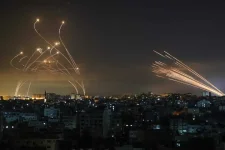
 media natin yan dito
You do not have permission to view the full content of this post. Log in or register now.International organizations in the Palestinian territories have largely assumed a role of advocacy on behalf of the Palestinians and against Israel, and much of the press has allowed this political role to supplant its journalistic function. This dynamic explains the thinking behind editorial choices that are otherwise difficult to grasp, like the example I gave in my first essay about the suppression by the AP’s Jerusalem bureau of a report about an Israeli peace offer to the Palestinians in 2008, or the decision to ignore the rally at Al-Quds University, or the idea that Hamas’s development of extensive armament works in Gaza in recent years was not worth serious coverage despite objectively being one of the most important storylines demanding reporters’ attention.
Most consumers of the Israel story don’t understand how the story is manufactured. But Hamas does. Since assuming power in Gaza in 2007, the Islamic Resistance Movement has come to understand that many reporters are committed to a narrative wherein Israelis are oppressors and Palestinians passive victims with reasonable goals, and are uninterested in contradictory information. Recognizing this, certain Hamas spokesmen have taken to confiding to Western journalists, including some I know personally, that the group is in fact a secretly pragmatic outfit with bellicose rhetoric, and journalists—eager to believe the confession, and sometimes unwilling to credit locals with the smarts necessary to deceive them—have taken it as a scoop instead of as spin.
During my time at the AP, we helped Hamas get this point across with a school of reporting that might be classified as “Surprising Signs of Moderation” (a direct precursor to the “Muslim Brotherhood Is Actually Liberal” school that enjoyed a brief vogue in Egypt). In one of my favorite stories, “More Tolerant Hamas” (December 11, 2011), reporters quoted a Hamas spokesman informing readers that the movement’s policy was that “we are not going to dictate anything to anyone,” and another Hamas leader saying the movement had “learned it needs to be more tolerant of others.” Around the same time, I was informed by the bureau’s senior editors that our Palestinian reporter in Gaza couldn’t possibly provide critical coverage of Hamas because doing so would put him in danger.

 .
.